EB-5 Immigration Overview
For many international investors, the United States stands as a country of boundless potential, a destination for creating tomorrow, and a stable environment for their families. Yet, the path to permanent residency can often feel like traversing a complicated labyrinth. This is where the EB-5 Immigrant Investor Program enters the picture, serving as a dependable pathway for those seeking to make a meaningful investment in the U.S. economy in exchange for the prestigious copyright. As an investor investigating your options for U.S. immigration, this detailed guide is designed to resolve your queries and light the way forward. We will delve into the specifics of the program, from the initial investment to the concluding phases of securing permanent residency, using the framework provided by U.S. Citizenship and Immigration Services (USCIS) to provide you with the most accurate and reliable information readily available.
Main Insights
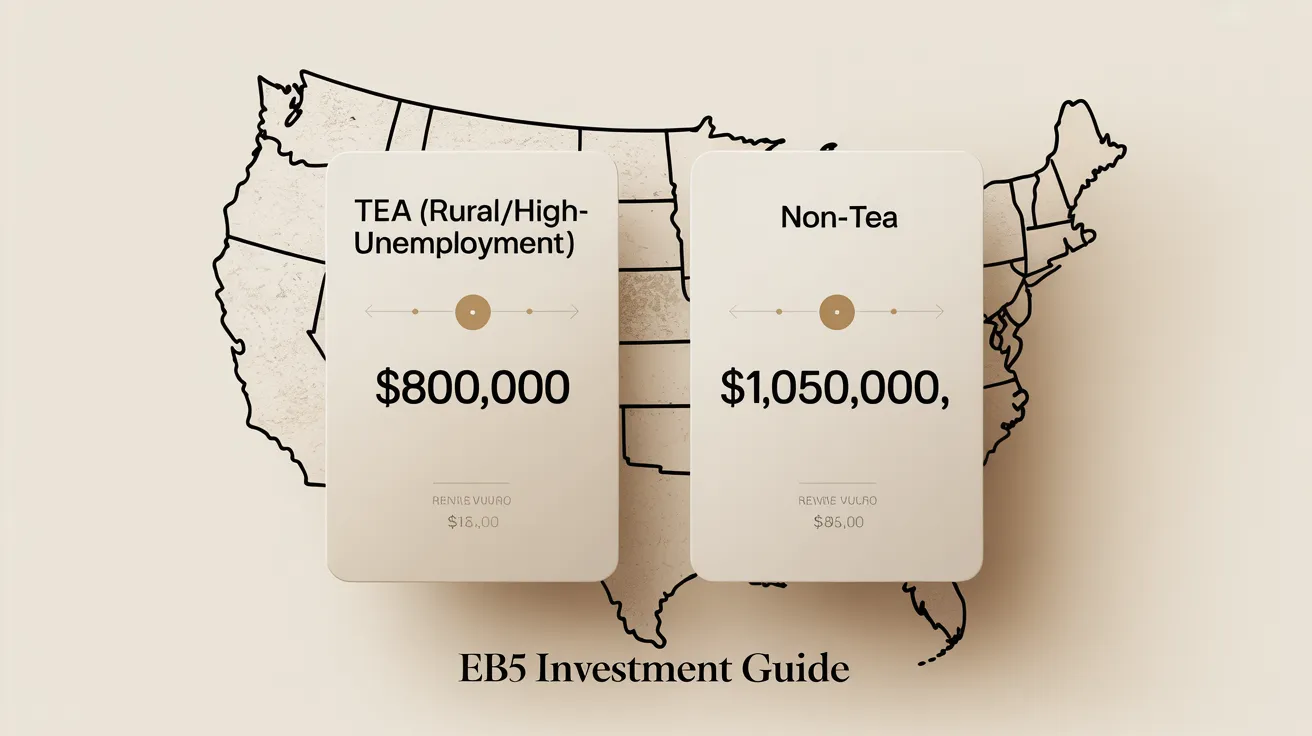
- The EB-5 visa program offers a reliable pathway to securing a U.S. copyright through investment, calling for an investment of $800,000 in designated TEA locations or $1,050,000 in non-TEA locations.
- The procedure requires filing Form I-526/I-526E, obtaining a two-year Conditional copyright, and then filing Form I-829 to remove the conditional status.
- Investors can select from a hands-off investment approach through a Regional Center or a active personal investment method.
- Detailed proof of the lawful source of funds is an essential element that strongly influences the success of your petition.
- Visa seekers from high-volume regions might experience processing delays and should track the Visa Bulletin for movement in priority dates.
- The initiative provides a copyright for program participants and their family members, with a potential pathway to U.S. citizenship after a five-year period.
The Ultimate Guide to the Investment-Based EB-5 Visa
This EB-5 copyright by investment goes beyond being just a visa; it is a gateway to a fresh start in the United States. Managed by USCIS, the program was designed to stimulate the U.S. economy through investment and employment generation by foreign investors. In return for their contribution, investors, as well as their spouses and unmarried children under 21, can obtain a copyright, providing them the ability to work, live, and study anywhere in the country. This approach ranks among the most reliable routes to permanent residency, as it doesn't need sponsorship from an employer or relative, offering a measure of freedom that is particularly appealing to worldwide investors and business professionals.
The EB-5 investment program represents proof of America's devotion to foreign investment driving economic growth. Unlike other immigration options that require family connections or employment sponsorship, the EB-5 route empowers investors to direct their immigration future through strategic capital deployment. This autonomous approach resonates with experienced business professionals and investors who prefer to rely on their own monetary assets rather than external sponsors.
Understanding EB-5 Investment Requirements: A Clear Guide
At the core of the EB-5 program resides the investment component. The necessary capital contribution isn't a universal figure; it varies based on the geographical area of the business venture where you place your capital. Understanding these financial requirements is the first and most critical stage in your EB-5 journey. USCIS has set two separate investment thresholds that represent the economic development objectives of the United States government.
Comparing the Two Tiers: $800,000 and $1,050,000
A potential investor has to contribute no less than $800,000 for investments in a project situated in a Targeted Employment Area (TEA). Alternatively, the minimum investment jumps to $1,050,000 for developments situated outside of these specified zones. These amounts are not arbitrary; they are strategically determined to channel funding into areas that need it most, and the difference is significant enough to make the investment location a crucial strategic element.
The investment criteria were determined with deliberate intent to channel foreign capital toward economically underserved regions. The $250,000 variance between TEA and non-TEA investments represents a substantial incentive that can influence investment choices and general investment approach. Investors should diligently consider not only the monetary aspects but also the lasting sustainability and employment generation prospects of projects in diverse regional zones.
Location, Location, Location: The Strategic Importance of a Targeted Employment Area (TEA)
The concept of a Targeted Employment Area (TEA) serves as a fundamental component of the EB-5 program. The program recognizes a TEA as either a rural area or a location experiencing high unemployment, namely areas with unemployment rates of at least 150% of the national average. The reduced investment threshold of $800,000 for projects within TEAs serves as a compelling motivation intended to direct foreign capital into communities that will benefit most from economic development and job creation.
When investors consider a TEA-based project, there's more than just lowering the required capital investment; these investments can also provide benefits including faster processing times and strong possibilities for fulfilling the program's strict job-creation criteria. Selecting a project within a TEA can therefore be a critical choice that determines the entire journey of your EB-5 visa copyright submission. As TEA designations are carefully monitored and updated periodically, it's vital for investors to confirm present designation before proceeding with any project.
Begin Your American Dream Journey: Completing Form I-526/I-526E
Following the identification of your investment project, the official process for obtaining your EB-5 visa starts with the submission of either Form I-526 or Form I-526E for Regional Center participation. This petition to USCIS must thoroughly demonstrate that your investment satisfies all EB-5 program criteria. This involves not only investing the specified investment capital but also submitting a comprehensive strategy showing how the investment will establish 10 or more full-time employment opportunities for U.S. workers.
The I-526/I-526E petition forms the cornerstone of your entire EB-5 application. All future stages in the process depends on the completeness and accuracy of this initial petition. The filing must showcase a compelling business case that establishes not only conformity to program requirements but also the feasibility and longevity of the proposed job creation. USCIS adjudicators scrutinize these submissions with substantial attention to detail, making thorough preparation fundamentally necessary.
Demonstrating Legitimacy: Source of Funds Documentation
An essential component of the I-526/I-526E petition is the documentation of the lawful source of your investment funds. USCIS emphasizes substantial focus on this aspect of the application, and you are required to present a thorough and traceable documentation of the origin of your capital. This requires providing extensive financial paperwork, such as bank statements, tax returns, and verification of property sales or other transactions, to establish a clear and unbroken chain of documentation that your funds were gained through legal means.
The comprehensive nature of your source of funds documentation plays a crucial role in your petition's success. USCIS mandates comprehensive documentation of funds from where they originated through all transfers leading to the EB-5 investment. This documentation needs to cover foreign exchange transactions, intermediate transfers, and any loans or gifts used in assembling the investment capital. The complexity of this requirement often necessitates working with skilled experts who comprehend the precise documentation requirements expected by USCIS.
The Investment Journey: Choosing Between a Regional Center and Direct Investment
The popular EB-5 immigrant investor program offers two unique options for investors: participating through a USCIS-approved Regional Center or making a direct investment into a new commercial enterprise. Deciding between these approaches will depend on your personal goals, how involved you want to be, and your comfort with risk. Each pathway comes with unique benefits and considerations that should be thoroughly assessed in relation to your individual circumstances and objectives.
A Regional Center operates as an economic organization, either public or private, which concentrates on promoting economic growth. Regional Centers are widely favored since they facilitate a less active investment strategy, consolidating capital from multiple investors and administering the investments for them. They also provide more adaptable job creation calculations, enabling the incorporation of both indirect and induced employment in addition to direct employment. This comprehensive job creation methodology can make it easier to achieve the program's employment criteria.
A direct investment, conversely, requires a greater level of involvement, where the investor takes an active role in managing the enterprise. This method provides greater control but also demands a greater degree of operational responsibility. Direct investments have to prove job creation through direct employment only, which can be more challenging but also more clear and demonstrable. The selection between these pathways should correspond to your investment strategy, time commitment capability, and level of confidence with varying business risk factors.
Understanding Your Two-Year Conditional copyright Journey
Upon approval of your Form I-526/I-526E petition and as soon as a visa is available according to the Visa Bulletin, you and your eligible family members will be granted a Conditional copyright, which is valid for a duration of two years. This is a major milestone, permitting you to live in the U.S. and begin your new life. Nevertheless, as the name indicates, this status is conditional and comes with specific responsibilities that have to be completed to maintain your legal status.
Throughout this two-year period, your investment money must remain fully invested and at risk in the project, and the investment must keep working toward satisfying the job creation specifications. This timeframe serves as a testing period, in which you must show your sustained commitment to the terms of the EB-5 program. The provisional status of this status means that failing to fulfill program requirements can result in the loss of your copyright and possible removal from the United States.
Having conditional residency status offers many of the same privileges of permanent residency, including the right to travel, work, and utilize certain government services. However, the conditional status establishes continuing regulatory requirements that need diligent tracking and record-keeping. Investors need to keep thorough records of their investment performance, job creation progress, and compliance with residency conditions throughout the conditional period.
Achieving copyright: Your Guide to Form I-829
To change from a conditional resident to a copyright, you are required to file Form I-829, the petition for removing conditional status. This form has to be filed within the 90-day period before the two-year mark of your admission to the U.S. as a conditional resident. The I-829 petition functions as the final step in demonstrating that you have met all the criteria of the EB-5 program.
You must show proof that your investment remained active throughout the two-year provisional term and that the specified 10 full-time jobs for U.S. workers were established or preserved through your investment. After approving your I-829 petition, the conditional requirements on your copyright will be eliminated, and you will obtain full permanent residency. This signifies the culmination of your EB-5 journey and the achievement of your goal of obtaining permanent U.S. residency through investment.
The I-829 submission needs thorough evidence proving compliance with every program requirement during the conditional period. This includes financial records verifying maintained investment, employment documentation confirming employment creation, and proof of the investor's continued involvement in the venture. The thoroughness and accuracy of this evidence directly influences the likelihood of petition approval and the favorable lifting of conditional status.
Understanding Backlogs, the Visa Bulletin, and Priority Dates: The Virtue of Patience
For those from nations with significant demand for EB-5 visas, like China, India, and Vietnam, the path to acquiring an investment copyright USA can entail a considerable waiting period. This is due to the annual per-country visa caps determined by the U.S. Congress, which limit the quantity of visas that can be provided to nationals of any single country at 7% of the total annual allotment for each visa category.
When you lodge your I-526 petition, you are given a "Priority Date," which basically establishes your position in the queue. The Visa Bulletin, updated on a monthly basis by the U.S. Department of State, offers information on visa allocation and tracks the advancement of priority dates for every country. You should monitor the Visa Bulletin to observe the advancement of priority dates and to determine when a visa will become accessible for your case.
As the traditional wisdom tells us, "patience is a virtue," and this rings especially true for EB-5 investors from oversubscribed countries. It is essential to consider these potential waiting times into your long-term planning and to recognize that the immigration process could require several years from beginning to end. An experienced EB-5 visa attorney can deliver crucial support in handling these intricacies and creating strategies to handle the waiting period efficiently.
Discovering New Possibilities: The Advantages and Benefits of the EB-5 Program
Even with the demanding requirements and potential waiting periods, the EB-5 program delivers a wealth of benefits that render it a popular immigration pathway. The key benefit is the chance for the investor, their spouse, and their unmarried children under 21 to gain permanent residency in the United States. This presents endless options, including the freedom to reside, be employed, and pursue education throughout in America without the need for a sponsor.
The EB-5 program offers unparalleled flexibility versus other immigration pathways. Different from employment-based visas that restrict you to a specific workplace or area, the EB-5 copyright enables complete geographic and professional flexibility. You can launch a venture, switch professions, or pursue education without immigration restrictions. This liberty is especially beneficial for professionals and entrepreneurs who value flexibility and autonomy in their career paths.
Moreover, after holding permanent residency for five years, EB-5 investors and their loved ones may be eligible to apply for U.S. citizenship, finalizing their path from investor to American citizen. The path to citizenship through EB-5 is straightforward, requiring only the preservation of copyright status and adherence to standard naturalization requirements. This symbolizes the ultimate achievement of the American dream for many international investors and their loved ones.
Common Queries
How does the EB-5 copyright process work?
The path to obtaining an EB-5 copyright involves multiple stages for international investors to acquire permanent residency in the United States. It begins with identifying a qualifying investment project, either a direct investment or through a Regional Center. Investors must submit Form I-526 or I-526E with USCIS, furnishing extensive documentation of their investment and their funds' legitimate origin. Upon approval and visa availability, investors and their families are granted a two-year Conditional copyright. Throughout this period, investors must maintain their investment and create at least 10 U.S. jobs. In the final step, the investor files Form I-829 to remove the conditions on their copyright and obtain unrestricted copyright.
How much investment is needed for EB-5?
The minimum investment requirement for the EB-5 program is set at $800,000 for investments situated within a Targeted Employment Area (TEA). A TEA is defined as either a rural area or a region with high unemployment. For developments outside of a TEA, the minimum investment requirement reaches $1,050,000. These figures are determined by USCIS and play a crucial role in an investor's decision-making process. The investment needs to remain at risk during the conditional residency period and must be sourced from lawful means with complete documentation.
How do we define a Targeted Employment Area (TEA)?
A TEA designation refers to a geographic area identified by USCIS that meets the criteria of either a rural region or an area with unemployment rates reaching at least 150% of the national average. The primary purpose of the TEA designation is to promote investment in regions of the country that require additional capital. Funding a TEA-based project permits an investor to meet the requirements for the lower investment requirement of $800,000. TEA status are based on precise economic and geographic requirements and are updated on a regular basis to account for evolving economic conditions.
How do Regional Center and direct investments differ?
When considering EB-5 investment, individuals can select from two investment models: either Regional Center programs or direct investment opportunities. A Regional Center is a USCIS-approved entity that manages investment projects and pools capital from multiple investors. This is a more passive investment option, as the Regional Center oversees the day-to-day management and job creation requirements. Regional Centers can count indirect and induced jobs toward the employment requirement. A direct investment involves greater personal involvement where the investor personally manages the company administration. This option provides greater authority while demanding more operational responsibility from the investor and is limited to counting direct jobs toward the employment requirement.
Understanding Conditional copyright
The Conditional copyright serves as a temporary, 24-month copyright granted to EB-5 investors after they receive I-526 approval and visa availability. This permission permits the investor and their dependents to reside and read more be employed in the U.S. Nevertheless, the status remains conditional upon the investor fulfilling all EB-5 program requirements, including sustaining their investment and establishing the necessary number of jobs. To transition to permanent residency, the investor must submit Form I-829 prior to the end of the two-year term. Missing the filing deadline or satisfy program requirements can result in loss of status and deportation from the United States.